Digital marketing in today’s era has evolved into one of the most powerful and essential tools for businesses of all sizes. It is no longer just an optional strategy but a necessity for survival and growth in an increasingly competitive and digitally connected world. At its core, digital marketing refers to the use of online platforms, digital technologies, and internet-based channels to promote products, services, and brands to a targeted audience. Unlike traditional marketing, which relied heavily on print media, television, and physical interactions, digital marketing leverages the power of the internet to reach consumers instantly, interactively, and globally.
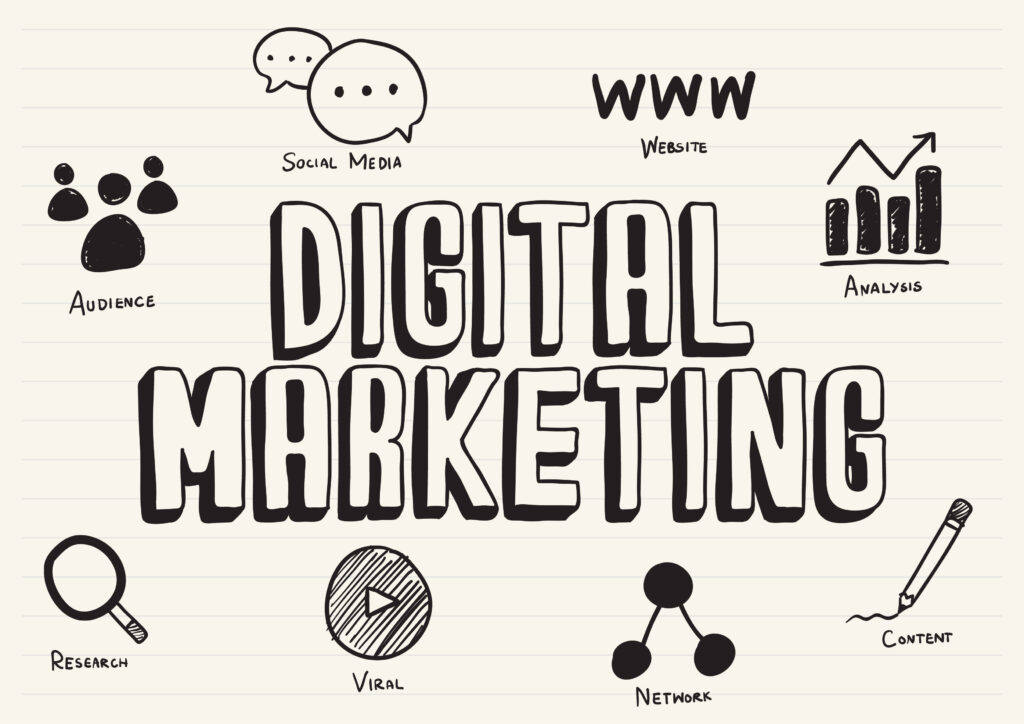
In the modern landscape, digital marketing encompasses a wide range of techniques and channels, including search engine optimization (SEO), social media marketing, content marketing, email marketing, influencer collaborations, pay-per-click (PPC) advertising, and more. Each of these components plays a crucial role in helping businesses connect with their audience at different stages of the customer journey. For example, SEO helps websites rank higher on search engines like Google, making them more visible to potential customers. Social media platforms like Instagram, Facebook, and LinkedIn enable brands to engage directly with users, build communities, and create brand loyalty. Content marketing focuses on delivering valuable and relevant information to attract and retain customers, while email marketing provides a personalized way to nurture leads and maintain long-term relationships.
One of the defining characteristics of digital marketing today is its data-driven nature. Businesses can now track almost every aspect of their campaigns, from website traffic and click-through rates to user behavior and conversion rates. This level of insight allows marketers to make informed decisions, optimize their strategies in real time, and achieve better results with less guesswork. Tools like analytics dashboards, customer relationship management (CRM) systems, and marketing automation platforms have made it easier than ever to measure performance and refine campaigns for maximum efficiency.
Another key feature of digital marketing in the current era is personalization. Consumers today expect tailored experiences that cater to their preferences, interests, and needs. Digital marketing enables businesses to deliver highly personalized content and offers based on user data, browsing history, and past interactions. This not only improves customer satisfaction but also increases the likelihood of conversions and repeat purchases. Personalized marketing has become a major differentiator for brands looking to stand out in a crowded marketplace.
The rise of mobile technology has also significantly influenced digital marketing. With the majority of users accessing the internet through smartphones, businesses must ensure that their websites, ads, and content are optimized for mobile devices. Mobile marketing strategies, such as app-based promotions, SMS campaigns, and location-based targeting, have become increasingly important. The ability to reach customers anytime and anywhere has transformed how brands communicate and engage with their audience.
In recent years, the integration of artificial intelligence (AI) and advanced digital tools has taken digital marketing to an entirely new level. Artificial tools are now at the forefront of innovation, reshaping how marketing strategies are developed, executed, and optimized. These tools use machine learning algorithms, natural language processing, and predictive analytics to automate tasks, analyze vast amounts of data, and deliver actionable insights.
One of the most significant impacts of AI in digital marketing is automation. Tasks that once required manual effort, such as sending emails, scheduling social media posts, or analyzing campaign performance, can now be handled by intelligent systems. Marketing automation tools allow businesses to streamline their workflows, save time, and focus on more strategic activities. For instance, automated email campaigns can be triggered based on user actions, such as signing up for a newsletter or abandoning a shopping cart. This ensures timely and relevant communication without the need for constant manual intervention.
AI-powered chatbots have also revolutionized customer service and engagement. These virtual assistants can interact with users in real time, answer queries, provide recommendations, and even assist with purchases. Available 24/7, chatbots enhance the customer experience by offering instant support and reducing response times. They also help businesses handle a large volume of inquiries efficiently, improving overall productivity and customer satisfaction.
Another major contribution of artificial tools is in the area of data analysis and predictive marketing. AI systems can analyze large datasets to identify patterns, trends, and customer behaviors that would be difficult for humans to detect. This enables businesses to anticipate customer needs, predict future trends, and make proactive decisions. Predictive analytics can help marketers determine which products are likely to perform well, which audience segments to target, and when to launch campaigns for maximum impact.
Content creation is another area where AI is making a significant impact. From generating blog posts and social media captions to designing visuals and videos, artificial tools are helping marketers produce high-quality content quickly and at scale. While human creativity remains essential, AI tools can assist in brainstorming ideas, optimizing content for search engines, and ensuring consistency across different platforms. This not only saves time but also allows businesses to maintain a strong and active online presence.
Search engine optimization has also been enhanced by AI technologies. Modern SEO tools use machine learning to analyze search trends, keyword performance, and competitor strategies. They provide recommendations on how to improve website rankings, optimize content, and enhance user experience. Voice search optimization, driven by AI-powered virtual assistants, is another emerging trend that marketers need to consider. As more users rely on voice commands to search for information, businesses must adapt their SEO strategies accordingly.
In the realm of advertising, AI has transformed how ads are created, targeted, and optimized. Programmatic advertising uses algorithms to automate the buying and placement of ads in real time. This ensures that ads are shown to the right audience at the right time, maximizing return on investment. AI also enables dynamic ad personalization, where ad content is automatically adjusted based on user behavior and preferences. This level of precision and efficiency was unimaginable in traditional advertising.
Social media marketing has also benefited greatly from artificial tools. AI-powered analytics platforms can monitor user engagement, track brand mentions, and analyze sentiment to understand how audiences perceive a brand. This helps businesses refine their social media strategies and respond effectively to customer feedback. Influencer marketing platforms use AI to identify the most suitable influencers based on audience demographics, engagement rates, and relevance to the brand.
Despite the numerous advantages, the growing reliance on artificial tools in digital marketing also presents certain challenges. One of the main concerns is data privacy and security. As businesses collect and analyze large amounts of user data, they must ensure that this information is handled responsibly and in compliance with regulations. Building trust with customers is crucial, and transparency in data usage is key to maintaining that trust.
Another challenge is the potential loss of human touch. While AI can automate processes and provide insights, it cannot fully replicate human creativity, emotions, and intuition. Successful digital marketing requires a balance between technology and human input. Marketers must use artificial tools as enablers rather than replacements, ensuring that their strategies remain authentic and customer-centric.
In conclusion, digital marketing in today’s era is a dynamic and ever-evolving field that plays a vital role in business success. It offers unparalleled opportunities for brands to connect with their audience, build relationships, and drive growth. The integration of artificial tools has further enhanced the capabilities of digital marketing, making it more efficient, data-driven, and personalized. As technology continues to advance, the impact of AI on digital marketing will only grow stronger. Businesses that embrace these innovations and adapt to changing trends will be better positioned to thrive in the digital age, while those that resist may struggle to keep up with the competition.